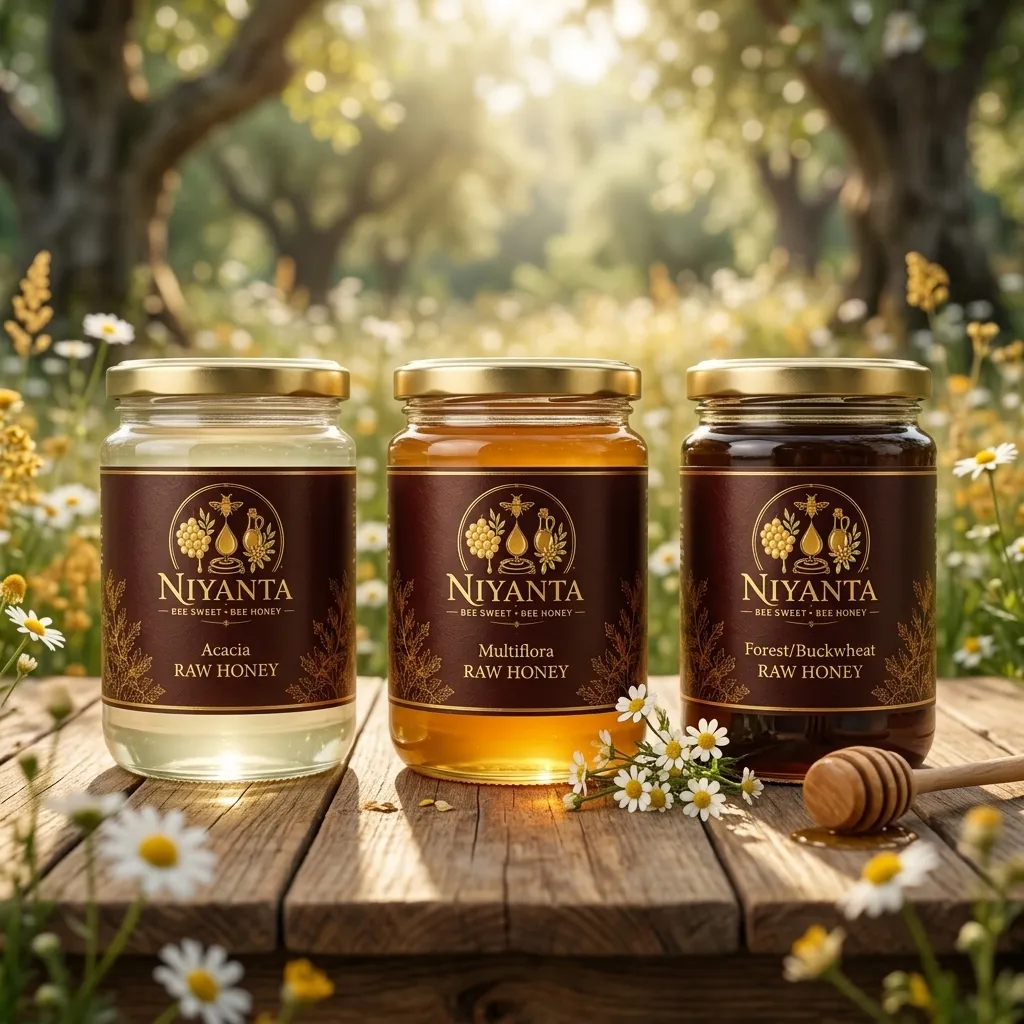
When purchasing honey, you will notice a striking variety of colors on the shelf. Some jars are a pale, translucent yellow, while others are a deep, opaque brown. What causes this color difference, and does it matter for your health?
The Floral Source Dictates the Color
The color of raw honey is determined almost entirely by the nectar of the flowers the bees visited. As a general rule:
- Lighter Honeys: Nectar from plants like clover, acacia, or mustard typically produces lighter, milder-tasting honey. It is an excellent everyday sweetener.
- Darker Honeys: Nectar from deep forest flora, buckwheat, or certain wild herbs produces dark, robust honey with a strong flavor profile.
Color and Antioxidants
Scientific studies show a direct correlation between the color of honey and its antioxidant content. Darker honeys, such as our wild forest honey, contain significantly higher levels of phenolic compounds and minerals than lighter varieties. However, our lighter multiflora honey remains an excellent, kid-friendly option for daily use.