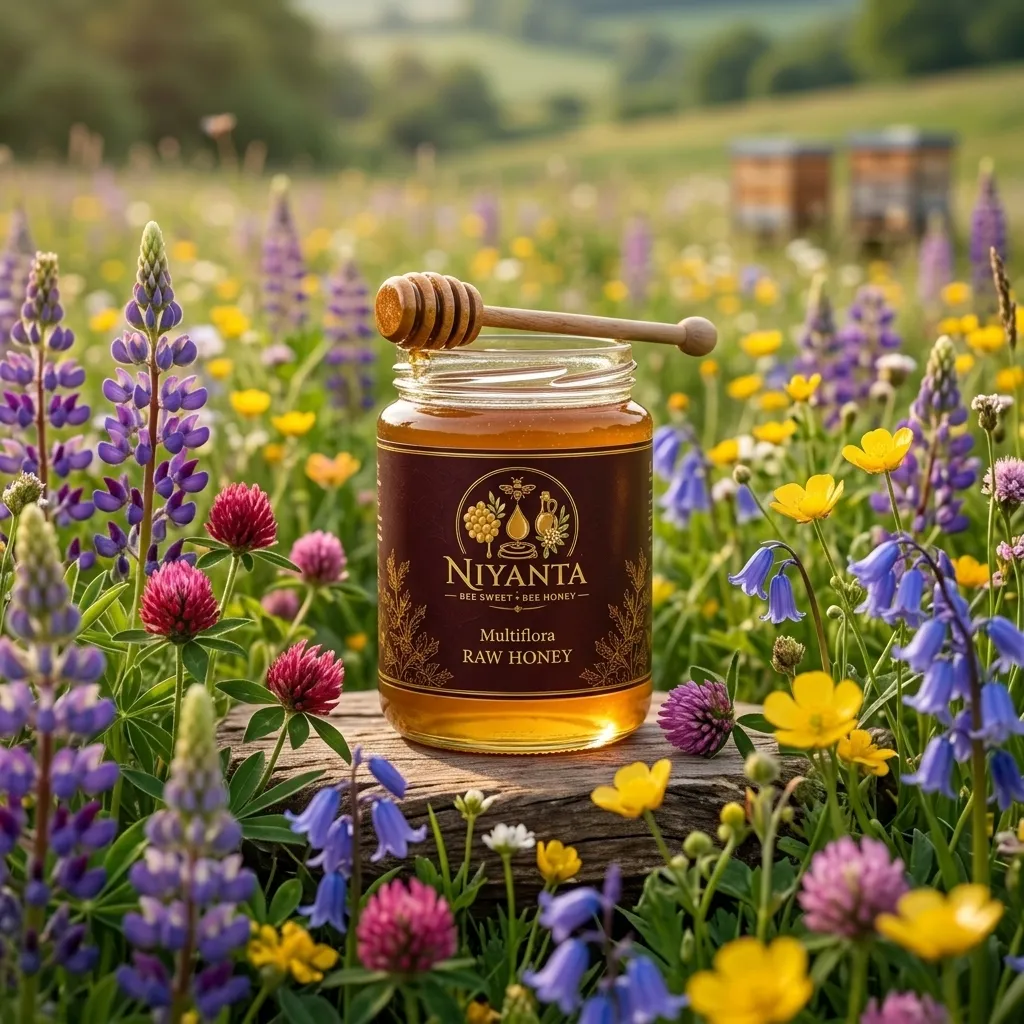
One of the most frequent compliments we receive from families in Surat is that our Multiflora Honey tastes different from the standard supermarket brands—it tastes like real nature. The secret to this complex, balanced flavor lies entirely in the diverse floral diet of our bees. Unlike single-origin honeys, multiflora is a beautiful blend of nature’s seasonal offerings.
The Foraging Radius
A single honeybee will fly up to 5 kilometers from its hive to gather nectar. To produce just one kilogram of honey, the bees in a colony must visit over two million flowers! Because our apiaries are placed in rich, biodiverse regions away from commercial monocrop agriculture, our bees have access to a vast buffet of wild and seasonal blossoms.
Common Floral Sources
Depending on the season of the harvest, our multiflora honey contains nectar from a variety of plants, which may include:
- Wild Mustard (Sarson): Adds a very mild, slightly tangy undertone and contributes to a quicker natural crystallization process (read why crystallization is natural).
- Neem and Tulsi: Occasional nectar from these medicinal plants adds subtle earthy notes and significantly boosts the honey's antibacterial properties.
- Fruit Orchards: Blossoms from local fruit trees like mango or litchi provide the bright, sweet, fruity top notes that make this honey so appealing to children.
- Wild Forest Shrubs: Various unnamed wildflowers add depth and complexity to the overall flavor profile.
A Nutritional Powerhouse
Because the bees are gathering nectar from such a wide variety of plants, they are also gathering a diverse spectrum of pollens. Each type of pollen brings its own unique trace minerals, amino acids, and antioxidants. This biodiversity makes multiflora honey an incredible all-rounder for daily immune support.
Experience the taste of a thousand flowers in every spoonful. Order NIYANTA Multiflora honey today.