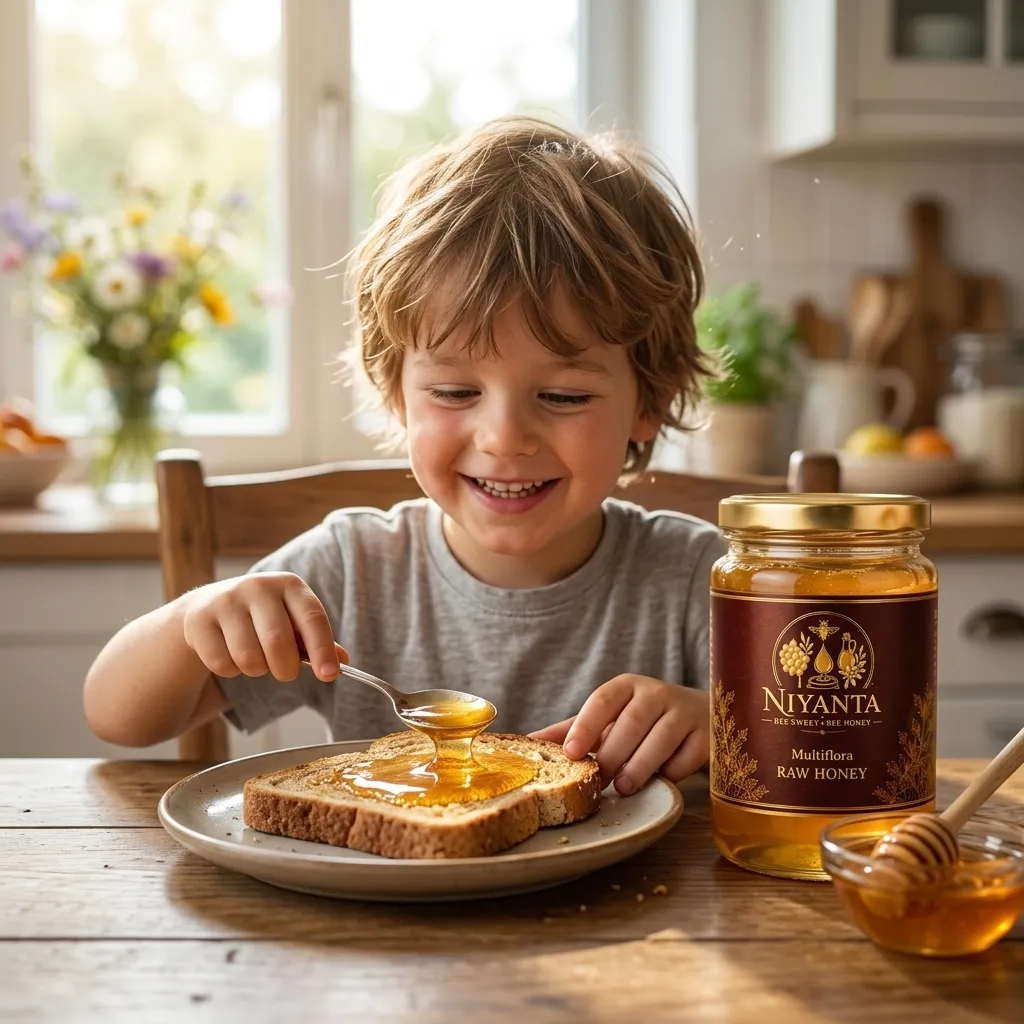
Parents are constantly searching for healthy, natural alternatives to the sugar-loaded snacks marketed to kids. Raw honey is a fantastic option, providing essential nutrients and sustained energy. However, it is crucial to understand when and how to introduce honey into your child's diet safely.
The Golden Rule: Not Under 12 Months
The most important safety rule regarding honey is that it should never be given to infants under one year of age. Raw honey can contain microscopic spores of a bacteria called Clostridium botulinum. While these spores are completely harmless to older children and adults, an infant's digestive system is not yet fully developed to handle them, which can lead to infant botulism. Always wait until your child's first birthday before introducing honey.
The Benefits of Raw Honey for Growing Kids
Once a child is over a year old, raw honey becomes a superfood for their development:
- Natural Energy: The natural fructose and glucose provide a sustained energy boost for active kids, unlike the hyperactive spike and crash caused by refined sugar.
- Cough Relief: The World Health Organization (WHO) recognizes honey as a safe, natural demulcent to soothe pediatric coughs and throat irritation.
- Immune Support: The antioxidants and antibacterial properties help fortify their developing immune systems against schoolyard bugs.
Kid-Friendly Honey Swaps
Replacing sugar with raw multiflora honey is incredibly easy:
- Honey Peanut Butter Toast: Skip the sugary jams and spread a layer of peanut butter drizzled with raw honey on whole-wheat bread.
- Sweetened Milk: Instead of chocolate powders laden with sugar, stir a spoonful of honey into their warm milk before bed.
- Homemade Fruit Popsicles: Blend fresh fruits (like mango or berries) with a little honey and yogurt, and freeze them in popsicle molds for a healthy summer treat.
Give your children the gift of natural, untainted nutrition. For more healthy cooking ideas, check out our guide to using honey in Indian cooking.