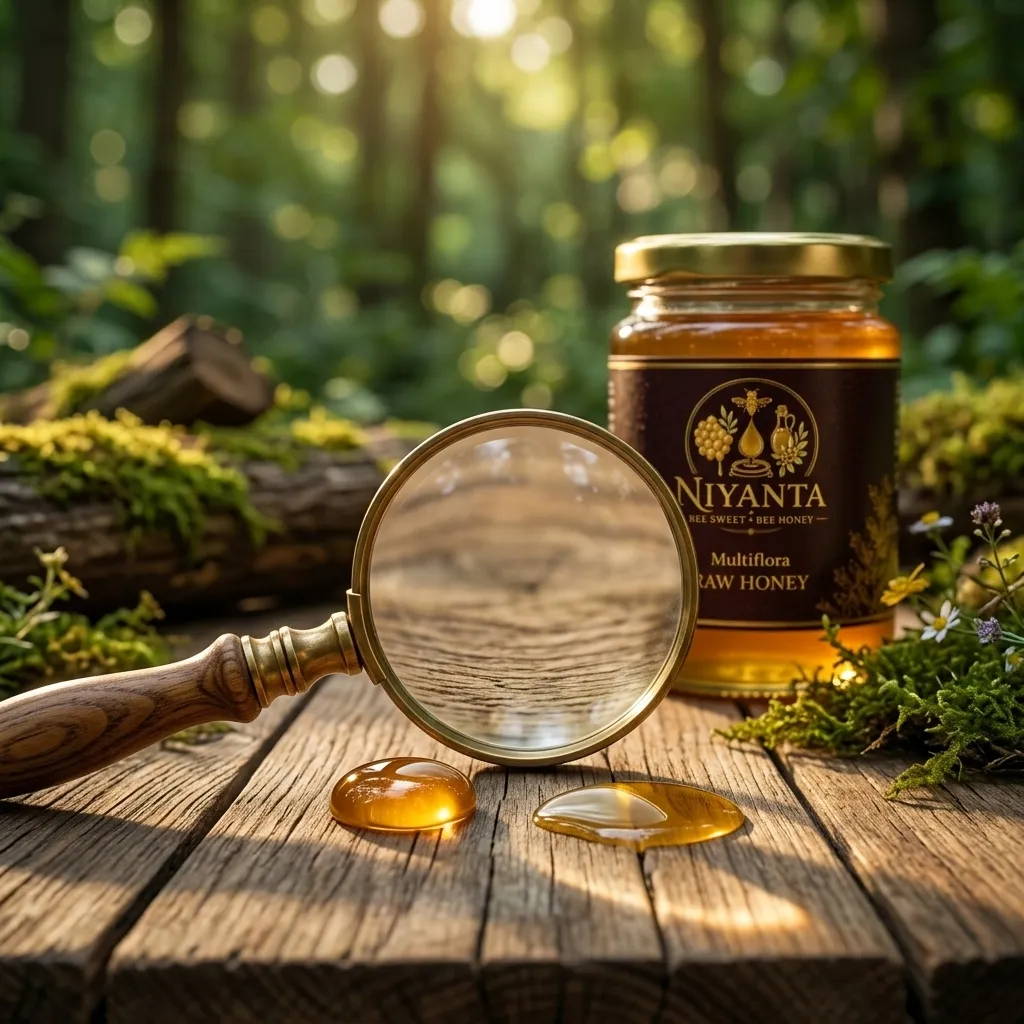
Walking through the markets of Surat, you will see countless jars labeled "100% Pure Honey." But with recent investigations revealing that many top commercial brands adulterate their honey with rice or corn syrup, how can you be sure you are getting the real thing? Fake honey is essentially flavored sugar syrup, offering none of the health benefits of raw honey. Here is a complete guide to protecting your family from fake honey.
The Water Test
This is one of the simplest and most effective home tests. Drop a teaspoon of your honey into a glass of plain water.
- Fake Honey: Will start dissolving immediately, turning the water cloudy before it even hits the bottom.
- Pure Raw Honey: Is dense and low in moisture. It will sink right to the bottom of the glass in a solid lump and require vigorous stirring to dissolve.
The Thumb Test
Place a small drop of honey on your thumb.
- If it spreads around or runs off your finger easily, it is likely adulterated with high-moisture syrups.
- Pure raw honey will hold its shape and stay intact on your thumb due to its thick consistency.
The Flame Test
Pure honey is highly flammable because it lacks excess moisture. Dip a dry matchstick into the honey and try to strike it against the matchbox.
- If it lights easily and burns, the honey is pure.
- If it fails to light or makes a cracking sound, it indicates the presence of added moisture or syrup.
The Ultimate Test: Lab Certification
While home tests are great, sophisticated adulteration (like C4 sugar syrups) can sometimes bypass them. The only foolproof way to guarantee purity is through NMR (Nuclear Magnetic Resonance) or rigorous lab testing.
At NIYANTA Natural, we don't just rely on trust; we prove it. Every batch of our honey is lab-tested and FSSAI certified. If you want true peace of mind, always buy from transparent sellers. Read more about finding the best raw honey in Surat.