Navigating the labels on food products can feel like learning a new language. When shopping for honey, the two most sought-after words are "Organic" and "Raw." Many consumers assume they mean the same thing, but they actually refer to two entirely different aspects of honey production. Understanding this difference is key to getting the health benefits you are paying for.
What Does "Organic" Mean?
Organic refers strictly to where the bees forage and how the land is managed. For honey to be certified organic, the bees must gather nectar from flowers located in an environment completely free of synthetic pesticides, herbicides, and chemical fertilizers for a radius of several kilometers. Furthermore, the beekeeper cannot use any chemical treatments inside the hive.
While this sounds ideal, here is the catch: Organic honey can still be pasteurized. A large commercial brand can harvest organic honey and then heat it to extreme temperatures to maximize shelf life, completely destroying its health properties. It is organic, but it is dead.
What Does "Raw" Mean?
Raw refers strictly to how the honey is processed after it leaves the hive. Raw honey is never heated above natural hive temperatures (around 40-45°C) and is only lightly strained, never ultra-filtered. This means all the natural enzymes, pollen, and antioxidants are preserved.
As we explained in our article on over-processed honey, heat is the enemy of honey's nutritional value.
Which is Better?
If you have to choose between pasteurized organic honey and non-organic raw honey, Raw is always the better choice for your health. The enzymes and antioxidants in raw honey provide the immune-boosting benefits you desire.
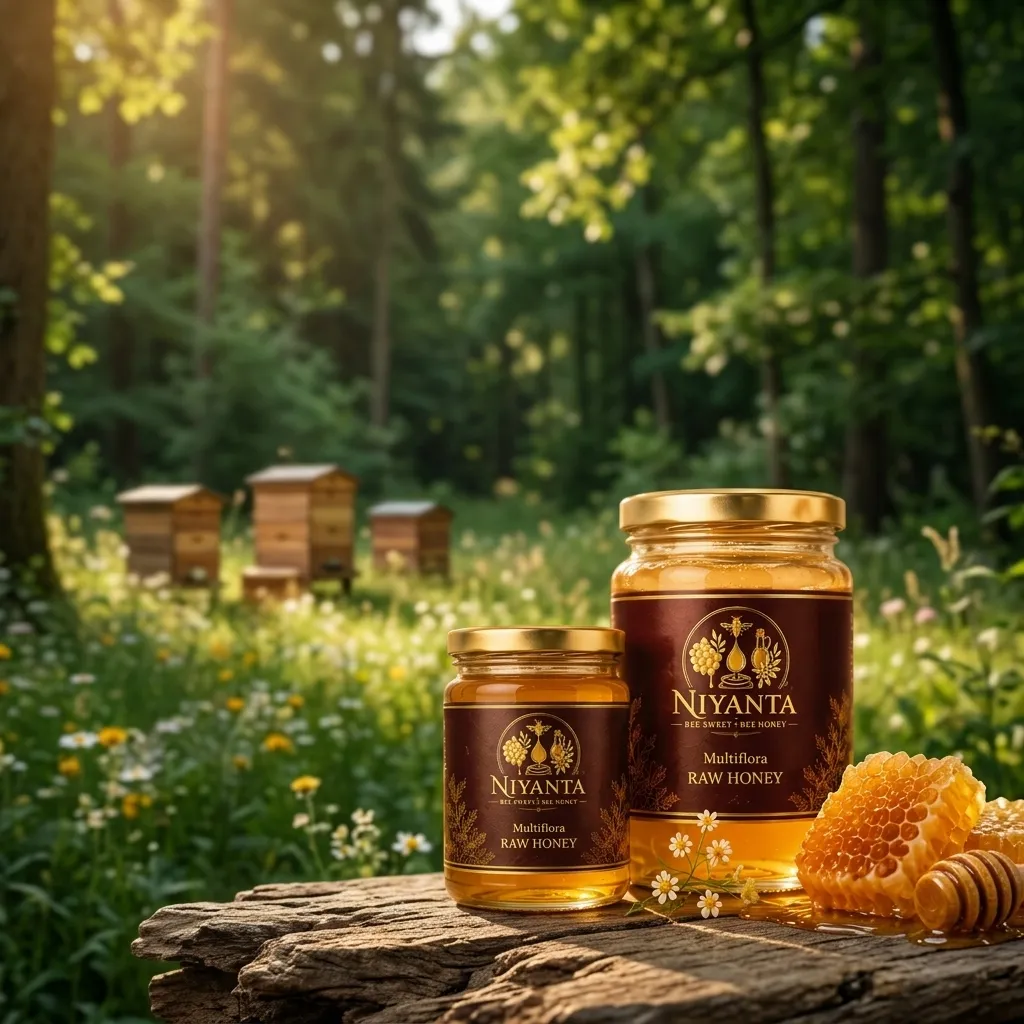
At NIYANTA Natural, we source our honey from pristine environments (like our wild forest honey) ensuring minimal exposure to chemicals, and we strictly keep it 100% raw and unpasteurized. You get the best of both worlds.