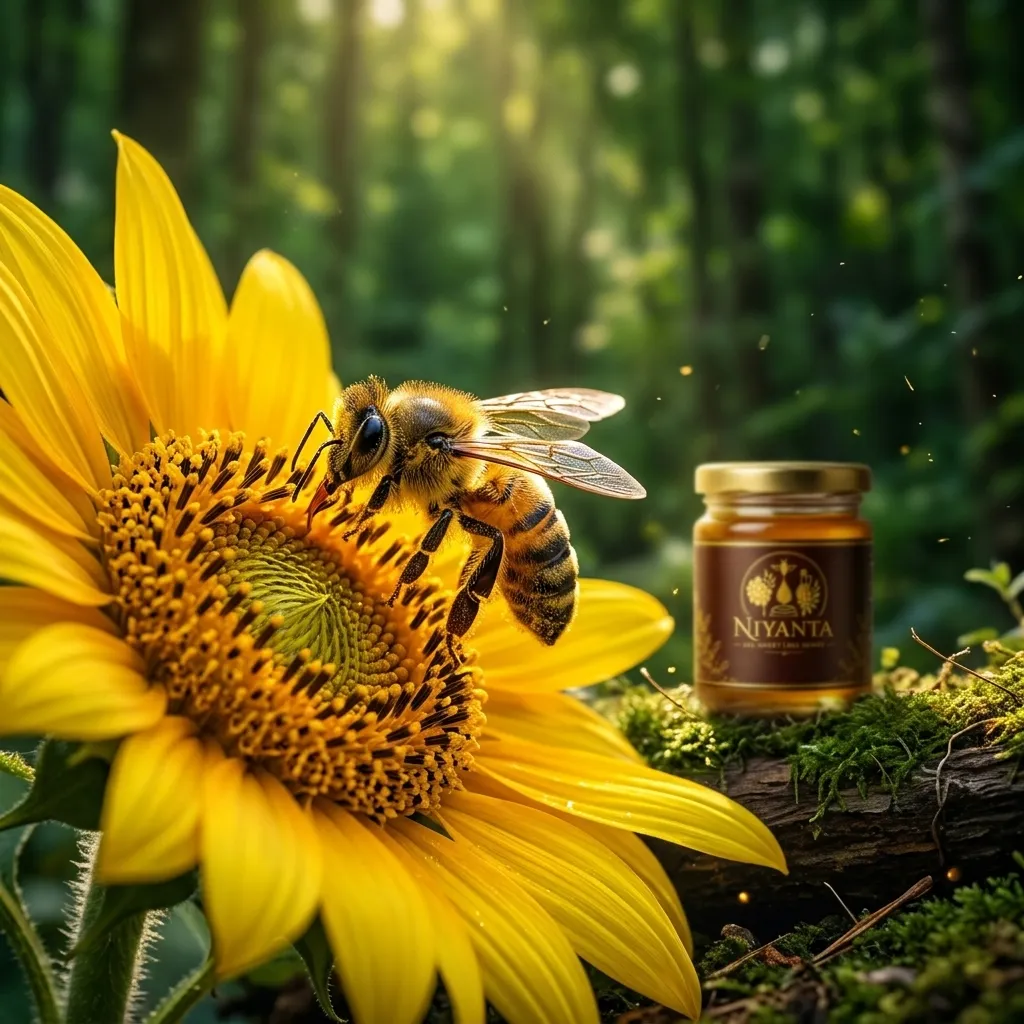
When you open a jar of NIYANTA honey, you are enjoying the life's work of thousands of incredible insects. But honeybees are far more than just nature’s sweet-makers; they are the invisible pillars of our global ecosystem. Without them, the food on our plates would look drastically different.
The Pollination Powerhouse
Honeybees are the world's most important pollinators of food crops. It is estimated that one-third of the food that we consume each day relies on pollination mainly by bees. When bees travel from flower to flower searching for nectar, they inadvertently transfer pollen, fertilizing the plants. Without this process, crops like almonds, apples, cucumbers, and countless wild plants would fail to produce fruit.
The Threat to Bees
Over the last decade, bee populations worldwide have faced severe threats due to habitat loss, climate change, and the heavy use of agricultural pesticides. Furthermore, industrial commercial beekeeping often prioritizes maximum honey yield over the health of the bees, leading to weakened colonies and diseases.
What is Ethical Beekeeping?
At NIYANTA Natural, we believe that the health of the hive comes before the harvest. Ethical beekeeping involves:
- Leaving Enough Honey: We never harvest all the honey. We ensure the bees have more than enough of their own honey to survive the harsh winter or monsoon seasons, rather than feeding them cheap sugar water.
- Cruelty-Free Harvesting: We extract honey carefully to ensure no bees are harmed or crushed in the process.
- Safe Environments: Our apiaries are placed in natural, wild environments away from pesticide-heavy commercial farming, ensuring the bees forage on pure, uncontaminated multiflora and forest flora.
How You Can Help
Every time you choose to buy raw, ethically sourced honey instead of mass-produced commercial brands, you are directly supporting beekeepers who care for the environment. You can read more about our sourcing process in our post about the journey of NIYANTA honey.
Protect the bees, protect the planet. Choose ethically sourced raw honey.