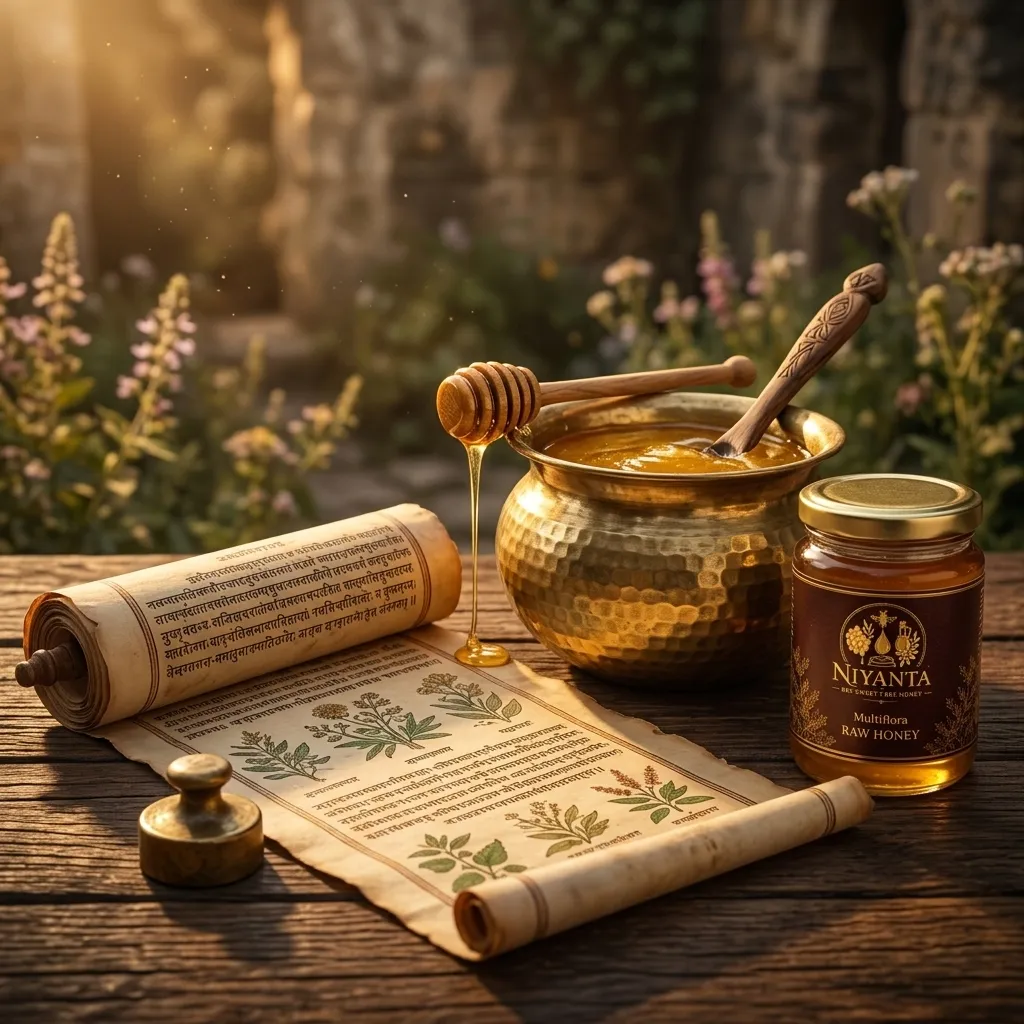
In India, honey is not just a sweetener; it is a substance of profound reverence. Known as Madhu in Sanskrit, honey has been intertwined with Indian spirituality, medicine, and daily life for over 4,000 years. Its golden purity is considered a divine gift, symbolizing immortality, health, and prosperity.
Honey in the Vedas
The Rig Veda, one of the oldest known sacred texts, contains numerous hymns dedicated to bees and honey. The Ashvins (twin Vedic deities of medicine) were often depicted carrying honey to heal the sick and bring vitality. Honey was considered the "nectar of the gods," representing the sweetness and abundance of life itself.
The Sacred Panchamrita
In Hindu traditions, honey is an essential ingredient in Panchamrita (the five nectars), alongside milk, yogurt, ghee, and sugar (or jaggery). This sacred mixture is used to bathe deities during pujas (worship rituals) and is then distributed as prasad (blessed offering) to devotees. The inclusion of honey represents sweet speech, purity, and devotion.
Madhu in Ayurveda
As we detailed in our deep dive on Honey and Ayurveda, ancient physicians like Charaka and Sushruta classified honey as a primary medicinal substance. It was prescribed for everything from healing deep wounds on the battlefield to curing internal imbalances, largely due to its role as a Yogavahi (catalyst for other herbs).
Cultural Significance for Newborns
In many Indian communities, there is a traditional ceremony called Jatakarma performed at birth. The father touches a golden spoon or a finger dipped in honey and ghee to the newborn's lips, whispering prayers for a long, healthy, and sweet life. (Note: Modern pediatric guidelines now advise waiting until 12 months, as discussed in our honey for children guide).
At NIYANTA, we strive to honor this ancient legacy by providing honey in its purest, most untainted form—just as our ancestors consumed it thousands of years ago.